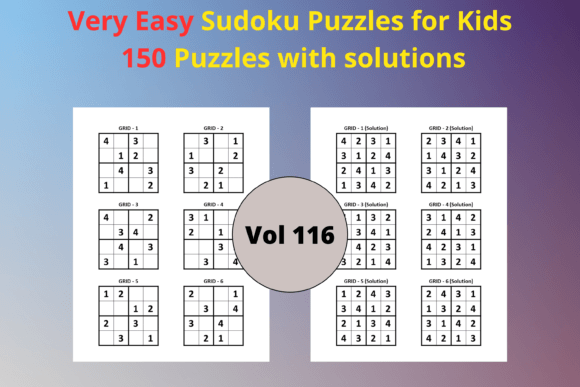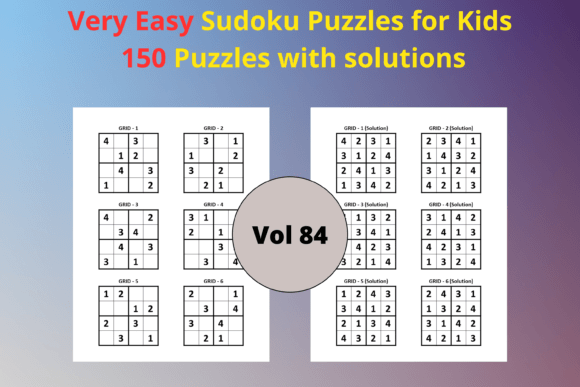
Very Easy Sudoku for Kids 84: A Gateway to Educational Fun
In the expansive world of children's educational resources, finding the perfect tool that balances engagement, skill-building, and accessibility can be a challenge. One standout offering is the concept encapsulated in collections like Very Easy Sudoku for Kids 84, which serves as a prime example of how structured puzzle books can foster cognitive development in young learners. This particular approach focuses on providing a substantial volume of beginner-friendly puzzles, specifically designed for the earliest stages of logical thinking.
The Core Design of 4x4 Sudoku for Young Minds
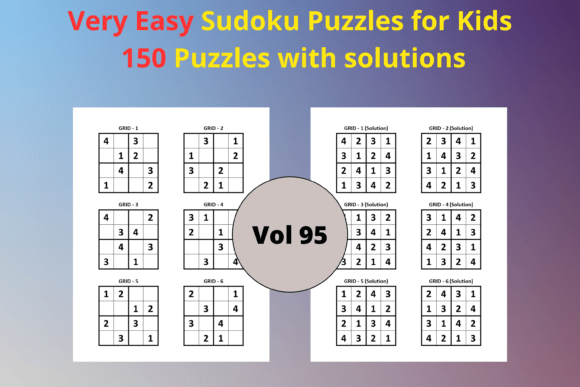
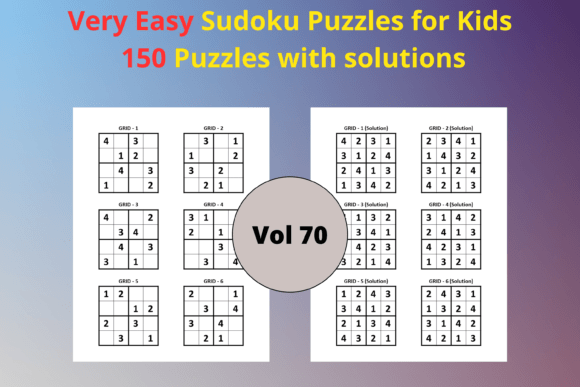
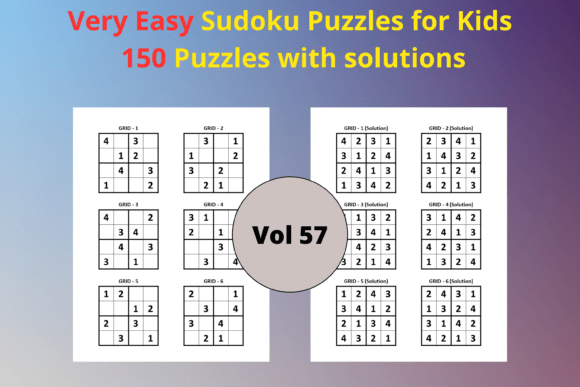
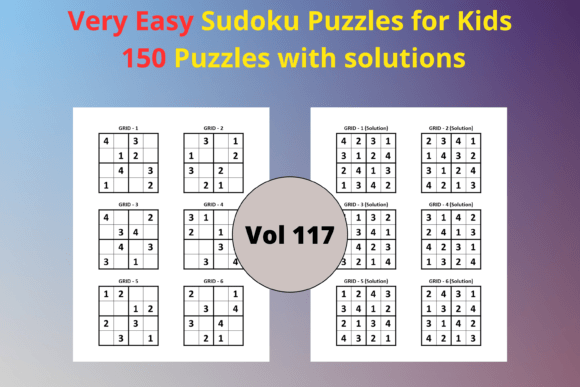
Traditional Sudoku grids can be intimidating for children. The shift to a 4x4 grid is a critical design choice. This smaller format reduces complexity while preserving the fundamental rules of the game: each row, column, and designated block must contain all numbers from 1 to 4 without repetition. This simplification is not merely a reduction in difficulty; it is a pedagogical strategy. It allows children to grasp the core logic of pattern completion without the frustration of a cluttered 9x9 grid. The "Very Easy" designation is key—these puzzles are calibrated to offer success, building confidence and encouraging persistence rather than presenting an immediate obstacle.
Characteristics of a High-Volume Puzzle Pack
A pack containing 150 different puzzles, such as the one referenced by the Very Easy Sudoku for Kids 84 model, offers distinct characteristics. Volume ensures variety, preventing monotony. Each puzzle, while adhering to the same basic rules, presents a unique arrangement of starting numbers, challenging the child's brain in subtly different ways each time. This repeated, varied practice is foundational for skill consolidation. Furthermore, including 150 corresponding solutions is not just an appendix; it is an integral part of the learning architecture. It provides immediate feedback and a reference point, allowing for self-correction and independent learning. The dual availability of PDF and PPTX files speaks to versatile usability—the PDF is ready for direct digital distribution or printing, while the editable PPTX empowers educators and creators to customize, adapt, or integrate puzzles into larger lesson plans or proprietary products.
Practical Applications in Real-World Settings
The utility of such a resource extends far beyond a simple activity book. In classroom environments, teachers can utilize these puzzles as warm-up exercises, quiet-time activities, or tools for teaching logical reasoning and attention to detail. Homeschooling parents find structured packs invaluable for supplementing math and critical thinking curricula. For creators in the KDP (Kindle Direct Publishing) and edibles space, this type of interior content represents a ready-to-use product component that meets a clear market demand for educational printables. Researchers observing cognitive development in early childhood might use consistent, graded puzzle sets like this to track progression in problem-solving abilities. Even in casual settings, such as long trips or waiting rooms, these puzzles provide a screen-free, engaging alternative that parents can readily offer.
Key Advantages for Diverse Users
- For the Child: Develops foundational skills in logic, pattern recognition, and concentration. The very easy level minimizes anxiety and promotes a positive "can-do" attitude towards puzzles and problem-solving.
- For the Educator or Parent: Offers a no-prep, scalable resource. With 150 puzzles, there is ample material for daily practice over extended periods. The clear solutions reduce the need for direct instruction, fostering child autonomy.
- For the KDP Publisher or Content Creator: Provides a complete, professionally structured interior. The 8.5 x 11 inch size is the standard for many printable books and worksheets, ensuring compatibility. The editable file allows for branding and adaptation, adding unique value.
- For the Broad Audience: Acts as a universally understandable tool. The principles of Sudoku are globally recognized, making this a resource with wide appeal regardless of specific cultural or educational background.
Considerations When Utilizing Such Puzzle Collections
While the advantages are clear, effective use requires some consideration. The "Very Easy" level is specifically for beginners; it may not challenge children who have already mastered 4x4 logic, necessitating progression to more difficult grids. The physical format—whether printed or used on a tablet—affects the experience. Printing the puzzles can offer a tactile benefit, while digital use might be more convenient for on-the-go situations. For commercial creators using the pack as KDP interiors, attention must be paid to overall book design, including covers, introductions, and page numbering, to create a cohesive final product. The editable PPTX file is a powerful feature, but it requires basic familiarity with presentation software to modify effectively.
Observing the Impact on Learning Workflows
Integrating a structured puzzle pack into a child's routine creates a observable workflow. A typical session might involve selecting a fresh puzzle from the collection, working through it with pencils or digital tools, and then checking the solution. This cycle reinforces the concept of a task with a definitive, achievable end point. Over time, the child’s speed and accuracy typically improve, demonstrating the cumulative effect of consistent practice. Educators might observe that children who engage regularly with such logic puzzles show improved focus in other, unrelated tasks, highlighting the transferable nature of the skills being honed.
The Role of Readiness and Format in Modern Distribution
The specification that the pack includes a PDF file ready to upload is a significant point for the digital age. It speaks to immediate utility. For an online seller, this means the product can be listed, delivered, and used by the customer within minutes. This readiness aligns with the expectations of modern consumers and professionals who value efficiency. The 8.5 x 11 inch size is equally practical, as it is the default for home printers and a common dimension for many printed books and workbooks, ensuring the end product looks professional and fits standard binders or folders.
Collections modeled on the idea of Very Easy Sudoku for Kids 84 represent more than just puzzles; they represent a system. They provide a graded, high-volume, and format-flexible approach to introducing a valuable cognitive exercise. By focusing on the simplest grid and ensuring an abundance of unique puzzles, they lower the barrier to entry and sustain engagement. This combination of thoughtful design and practical delivery makes such resources a relevant and helpful tool for a wide spectrum of users—from the parent looking for a quiet activity to the entrepreneur building a library of educational content.