Understanding the Distinctive Features of the Brain Dump Planner 2023-2024 KDP V2
For creators navigating the self-publishing landscape, particularly within the planner and productivity niche, the availability of print-ready interior files is a critical resource. The Brain Dump Planner 2023-2024 KDP V2, along with its associated interior design volume, represents a specific approach to providing such assets. This article examines its characteristics, how it compares to broader options available to designers, and what practical considerations might influence a choice to use it.
What Is the Brain Dump Planner 2023-2024 KDP V2 Package?
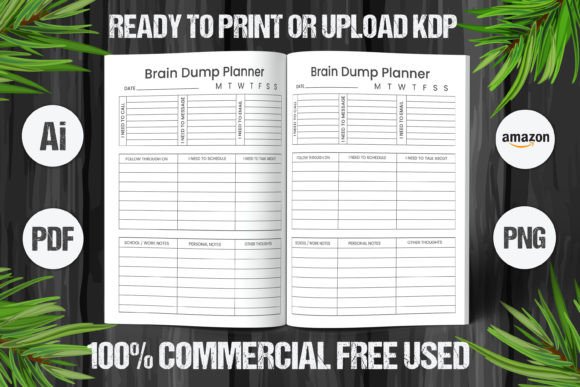
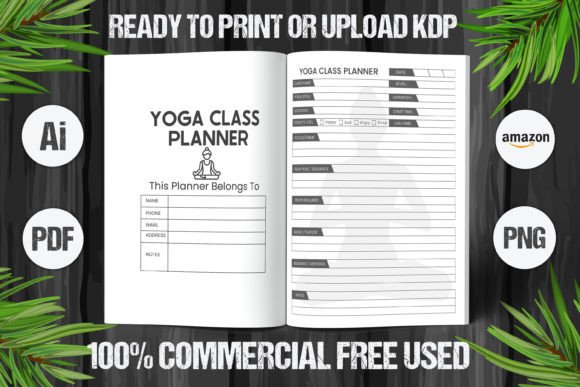
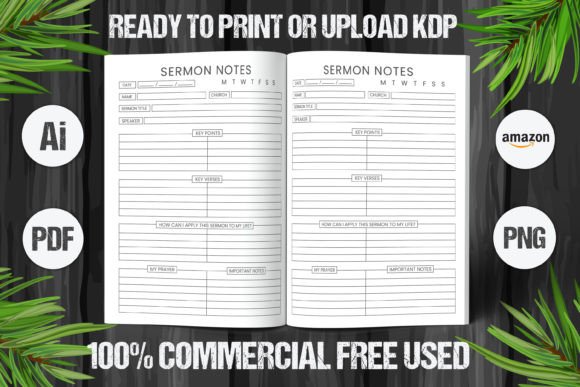
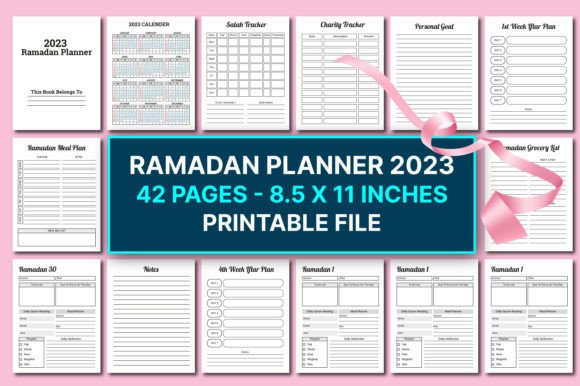
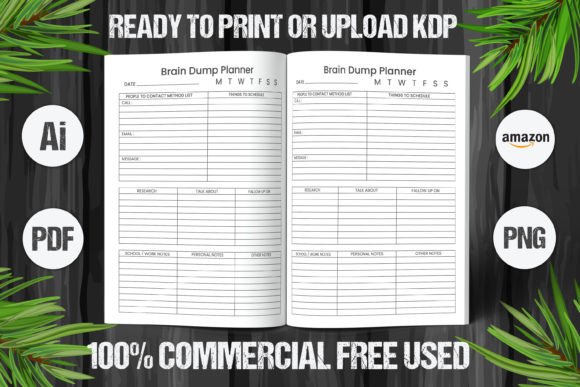
Fundamentally, this product is a comprehensive digital package designed for individuals intending to publish a planner on platforms like Amazon's Kindle Direct Publishing (KDP). It is not a physical planner but a set of digital files. The core offering includes the "Brain Dump Planner 2023-2024 KDP Interiors designs voll 2," which consists of high-resolution, print-ready files for 120 pages. The key components are an editable Adobe Illustrator (.ai) file, PDFs, and PNGs, all formatted to the standard KDP interior dimension of 8.5" x 11" without bleed.
What makes this distinct from many generic template packs is its specific thematic framing around the "brain dump" methodology—a productivity technique for capturing unstructured thoughts before organizing them—and its explicit tailoring for the 2023-2024 calendar period. The inclusion of a native Illustrator file for editing is a significant feature, as it offers a level of customization depth not always present in PDF-only or raster image (PNG/JPG) packs.
Comparing Formats and Approaches for KDP Interiors
When evaluating resources for creating a KDP planner, creators typically weigh several formats. Some opt for pre-made, fully locked PDF interiors where you essentially upload the file unchanged. Others use collections of PNG images that can be assembled in basic software, offering flexibility in page order but limited design alteration. A third category includes editable vector files, like the Illustrator file provided in the Brain Dump Planner 2023-2024 KDP V2.
The editable vector approach sits at a particular point on the spectrum of control versus convenience. Using the .ai file, a creator with Illustrator skills can change colors, fonts, layout elements, and even the core structure of pages. This contrasts with a PNG pack, where you might only rearrange or overlay text, or a static PDF, which offers no editing at all. The tradeoff is clear: greater potential for unique customization requires specific software expertise and time investment. For someone seeking a truly differentiated planner but starting from a robust template, this package aligns with that need.
Practical Considerations: The "Fully Editable" Claim
The feature list emphasizes a "Fully Editable Design." In practice, this depends largely on the user's proficiency. The Illustrator file is a powerful starting point, but editing it is not akin to using a simple drag-and-drop online tool. Elements may be grouped, layers organized in a specific way, and font licensing might need separate verification. For a graphic designer comfortable with Adobe software, this is a valuable asset. For a novice without Illustrator access or skills, the PDF and PNG files become the primary usable resources, shifting the product's utility towards a more straightforward, assembly-based project.
Strengths and Potential Limitations in Context
A primary strength of this package is its completeness and resolution. Having 120 pages of coordinated design in multiple file types (AI, PDF, PNG) addresses several workflow possibilities. The high-resolution print-ready status means it bypasses a common hurdle for creators: ensuring files meet KDP's quality thresholds for printing. The thematic coherence around brain dump pages integrated with standard planner layouts (calendars, trackers, etc.) can also be a strength for targeting a specific audience interested in cognitive offloading techniques.
Potential limitations are often situational. The fixed 2023-2024 date range is a double-edged sword. It makes the product highly relevant for publishers aiming for that precise timeframe, but it becomes obsolete for those planning a 2025 planner or a undated, evergreen product. Furthermore, the "No Bleed" specification is ideal for interiors without full-color edge designs but restricts creators who envision a planner with elaborate background art extending to the page edges. It is perfectly suited for text-heavy, functional layouts.
Evaluating Fit: When Is This the Right Choice?
The Brain Dump Planner 2023-2024 KDP V2 package may be a fitting resource under several conditions. First, for a publisher who has identified a market demand for planners incorporating brain dump or free-thought capture sections alongside traditional planning elements. Second, for a creator who possesses, or has access to, Adobe Illustrator and wishes to customize a template significantly—perhaps to align with a broader brand aesthetic or to combine elements from different templates. Third, for someone seeking efficiency in the technical preparation stage, as the print-ready files reduce the risk of upload errors related to dimension or resolution.
Conversely, there are scenarios where an alternative might be more appropriate. If your project requires a bleed for a richly colored design, you would need to look for a template package that includes bleed specifications or consider a custom design. If you are targeting a different calendar year or want a completely undated product, this specific version's timeframe is a mismatch. Also, if your customization needs are minimal and you prefer a simpler, perhaps online-based editing process, a template system built around Canva or similar software might offer a more intuitive path, even if it provides less foundational design control.
Tradeoffs Between Customization and Speed
A realistic example illustrates a common tradeoff. Imagine two creators: Alice is a graphic designer launching a planner side-business. She wants a unique look but needs a structural starting point to save time. The Brain Dump Planner V2 Illustrator file allows her to quickly modify color schemes, replace placeholder graphics with her own, and adjust page flow, leveraging her expertise to create a distinct product rapidly.
Bob, however, is a content creator with no design software experience. He primarily needs a professional-looking planner to accompany his productivity course. For him, the PDF and PNG files from the same package are usable; he could add his text via a PDF editor or image overlay tool. However, the deep customization potential of the .ai file is inaccessible, and he might find the process of assembling 120 PNGs cumbersome. Bob might have been equally served by a simpler, pre-formatted PDF interior or a service that offers a more guided design process.
Decision Factors for Publishers and Creators
When researching options like the Brain Dump Planner 2023-2024 KDP V2, a few concrete factors can guide a decision. Consider your technical assets: Do you have and know how to use Adobe Illustrator? If not, does the value come from the other file types alone? Assess your timeline and topical relevance: Is publishing a 2023-2024 planner aligned with your schedule? Does the brain dump theme resonate with your audience or your own content brand?
Also, weigh the scope of customization you truly need. If your goal is to enter the market quickly with a competent product, a less editable but perfectly formatted template might suffice. If differentiation in a crowded market is your primary strategy, the editable vector file provides a tangible advantage. Finally, always verify the practical details: the 8.5" x 11" no-bleed format is standard for many KDP workbooks and planners, but confirm it matches your exact book size plan.
In essence, products like this exist to bridge the gap between fully custom design—which is time-intensive and costly—and completely generic templates—which may lack uniqueness. The Brain Dump Planner 2023-2024 KDP V2 occupies a middle ground, offering a themed, structured foundation with a pathway to modification. Its utility is maximized when the user's skills, publishing timeline, and design goals align with its specific offerings. For those whose needs fall outside these parameters, the broader marketplace of KDP interiors offers numerous other styles and formats, each with its own set of tradeoffs between convenience, control, and final product originality.