The Essential Role of Very Easy Sudoku Puzzles in Cognitive Play
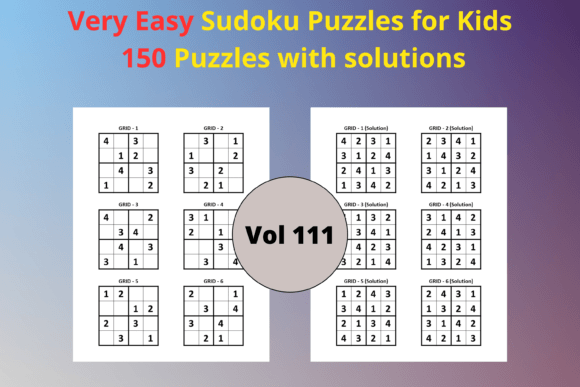
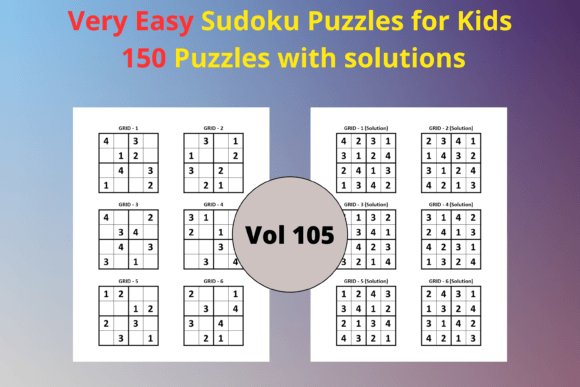
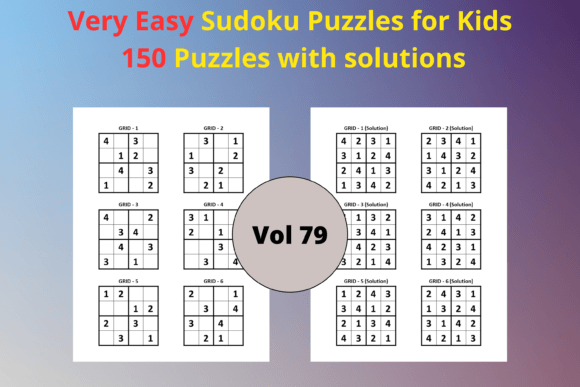
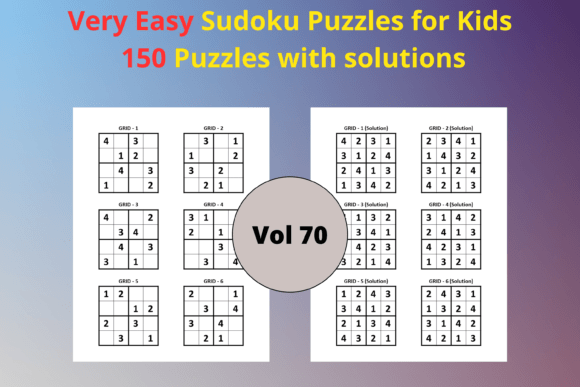
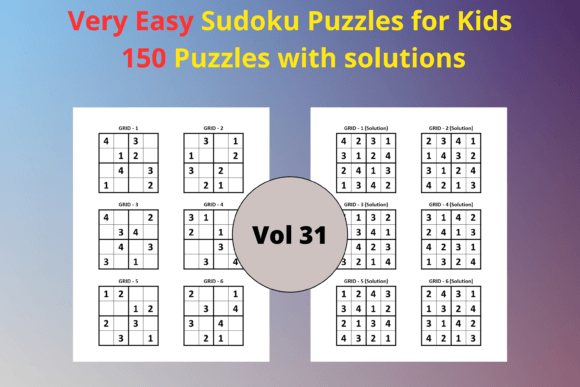
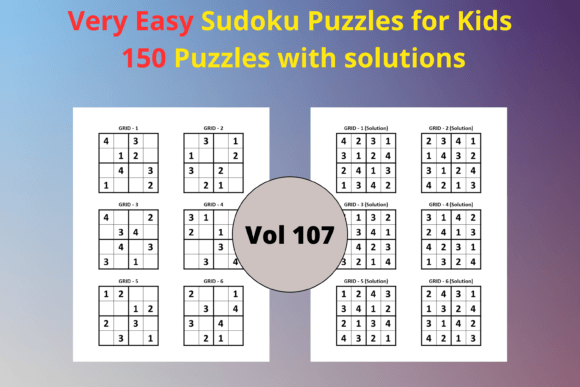
The landscape of educational tools for children is vast, yet few offer the simple, focused cognitive exercise of a well-designed puzzle. Among these, Sudoku stands out, particularly when tailored for young minds. A resource like "Very Easy Sudoku for Kids 107," part of a larger collection featuring 150 different very easy Sudoku puzzles with solutions, exemplifies this approach. It transforms a classic logic game into an accessible, engaging activity for early learners. This specific package, designed as KDP interiors, provides not just puzzles but a complete, editable system for educators, parents, and creators.
Understanding the Core Mechanics of 4x4 Sudoku for Children
Standard Sudoku can be intimidating. The reduction to a 4x4 grid is the first critical adaptation. This smaller format maintains the core rule: each row, each column, and each designated block must contain all the numbers or symbols used, without repetition. For very easy levels, the puzzles begin with a high number of pre-filled cells, guiding the child towards the solution with minimal logical deduction. The goal is not to challenge, but to introduce pattern recognition, systematic thinking, and the satisfaction of completing a structured task.
Consider a typical puzzle from such a collection. A child sees a grid with perhaps only four empty cells. Their task is to examine the rows and columns already containing 1, 2, 3, and 4, and deduce the missing number. This process, repeated across 150 unique puzzles, builds familiarity and confidence. The inclusion of solutions, as found in this pack, allows for immediate verification and learning from mistakes without frustration.
Primary User Groups and Practical Applications
The utility of a ready-to-use puzzle pack extends beyond the child solving the puzzles. Several key groups find direct value in this material.
Educators in early elementary settings utilize these puzzles as classroom warm-ups, quiet time activities, or supplementary logic exercises. They can be integrated into math centers or used as rewards. The editable PPTX file allows teachers to modify puzzles, perhaps replacing numbers with shapes or colors for pre-readers, or to create their own themed sets.
Parents and caregivers seek structured, screen-free activities that promote quiet focus. A book containing 150 very easy Sudoku puzzles offers substantial, reusable material for travel, waiting rooms, or daily routine building. The very easy level ensures the activity is enjoyable rather than stressful, fostering a positive association with puzzle-solving.
Content creators and self-publishing authors, particularly on platforms like Amazon KDP, look for professional, ready-to-upload interiors. This pack, with its PDF ready for upload and complementary editable PowerPoint file, serves as a complete product foundation. One can use the puzzles directly, combine them with other activities, or adapt the formatting for different age groups, all while knowing the puzzles are correctly constructed and include solutions.
Structural and Design Considerations for Usability
The physical and digital specifications of such a puzzle pack greatly influence its practicality. The size of 8.5 x 11 inches is standard for many workbooks and printable sheets in North America, compatible with home printers and professional binding. A clean, clear layout is crucial for children—ample space around each 4x4 grid, large, legible numerals, and a consistent placement of puzzle numbers and solution pages.
The provision of both a PDF and a PPTX file addresses divergent needs. The PDF ensures fidelity; it is a locked format ready for commercial upload or printing, guaranteeing that the puzzles and solutions appear exactly as designed. The PPTX file empowers modification. A homeschooling parent might want to add a child’s name to a title page. A therapist might want to intersperse puzzles with other cognitive exercises. This dual format maximizes the resource's adaptability.
The Cumulative Benefit of Volume and Variety
Offering 150 different puzzles, rather than a mere handful, is a significant advantage. Variety prevents rote memorization of puzzle patterns. Each puzzle, while adhering to the "very easy" difficulty, presents a unique starting configuration. This ensures the cognitive exercise remains fresh across many sessions. Volume provides economy and trust for the purchaser; they understand this is a substantial resource that will last.
The systematic inclusion of 150 corresponding solutions is not merely an appendix. It is a learning tool. A child can independently check their work, reinforcing the concept of a single correct answer based on rules. For an adult overseeing many children, it provides a quick reference key, saving time and ensuring accuracy during guidance.
Integrating Puzzle Work into Educational and Developmental Workflows
The use of very easy Sudoku puzzles fits seamlessly into various daily routines. In a classroom workflow, a teacher might assign one puzzle as a morning arrival activity, using it to settle students and transition into the day. The repetitive, calm nature of the task helps regulate the learning environment.
In a home setting, puzzles can be part of a "learning station" or used after homework as a relaxing yet productive pastime. The fact that they are very easy means they do not compete with or drain energy from core academic work; they complement it by exercising a different part of the brain—logical reasoning without arithmetic pressure.
For creators, the workflow involves utilizing the provided files to assemble a final product. They might use the PDF directly for a print-on-demand puzzle book, or use the PPTX to create a digital bundle for educators, adding instructions, teaching notes, or activity prompts alongside the 150 puzzles. The editable nature supports branding and market differentiation.
Observing children engage with these puzzles reveals subtle benefits. Beyond the obvious logic practice, there is an development of patience and attention span. Completing a puzzle provides a tangible, visual reward—a fully filled grid. This reinforces the value of step-by-step problem-solving. Moreover, the non-verbal, numerical nature of Sudoku can be particularly engaging for children who gravitate towards patterns over words.
Key Distinctions from Other Puzzle Formats
Compared to crosswords or word searches, Sudoku is purely symbolic and logical. It does not require vocabulary knowledge, making it accessible to a wider range of developmental stages and linguistic backgrounds. Against more complex logic puzzles or mazes, the very easy 4x4 Sudoku presents a lower barrier to entry. The child is not navigating multi-step inferences; they are often performing single-step deductions based on a clearly visible set of constraints.
The specific package discussed, encompassing 150 puzzles and solutions, also stands apart from single-puzzle apps or sporadic worksheets. It represents a curated, comprehensive collection designed for repeated, long-term use. The professional formatting as KDP interiors indicates a focus on commercial and serious educational application, not just casual play.
Final Observations on Sustainable Learning Resources
A resource like this underscores a principle in educational tool design: simplicity, volume, and adaptability create lasting value. The "very easy" classification is not a limitation but a purposeful filter ensuring the activity matches the child's capability, promoting success over struggle. The 150 puzzles guarantee the resource won't be exhausted in a single sitting, encouraging habitual use.
The inclusion of solutions transforms the pack from a mere activity book into a self-contained learning system. The provision of editable source files respects the expertise and specific needs of the adult users—teachers, parents, creators—allowing them to tailor the material to their unique context. Ultimately, such a pack demonstrates how a classic puzzle, thoughtfully scaled and generously provided, can serve as a versatile tool across homes, classrooms, and creative businesses, fostering early logical thinking in a format that feels like play.